9–15 November 2026 · other logic partners
china & asia brand moves
Lao Miao, Marni × HOKA and Louis Vuitton
Shanghai's gold jewellers stage a runway beside a price promotion, Marni turns a HOKA trainer into an everyday shoe, and Louis Vuitton builds a Keith Haring collection on a suitcase it bought back at auction.
01 / Fine jewellery · China
Lao Miao & Shanghai's gold jewellers
Gold takes the runway, then goes on promotion
Shanghai's jewellery month presents Chinese gold as design and culture, while the shops nearby sell it with vouchers and discounts.
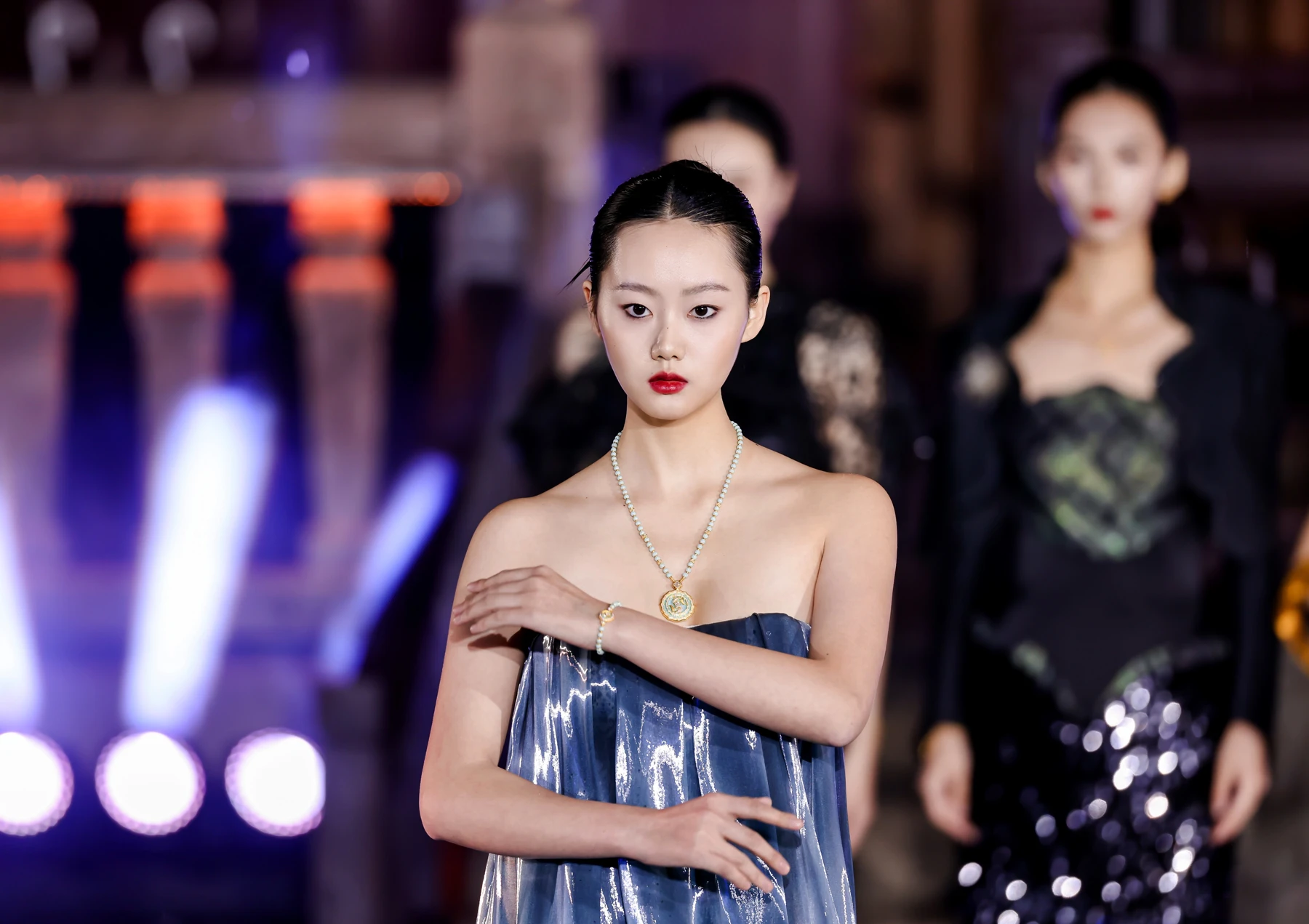
On 12 November, Shanghai's Yuyuan district opened its International Jewellery Fashion Month (12–30 November) with what local reporting called the first jewellery runway staged beside the Nine-Turn Bridge. Lao Miao, Ya Yi, CHJ Jewellery and other Chinese labels showed traditional goldsmithing with contemporary Chinese couture, Kunqu opera and electronic music. From 12 to 15 November, stores across Yuyuan Mall layered discounts and district vouchers, starting at RMB 45 per RMB 1,000 spent, while the Bund Finance Center ran its own gold and designer jewellery promotions.
Collective spectacle, individual price competition
The event sends two messages within a few hundred metres. The runway argues that Chinese gold is design, craft and culture. The counters argue that it is metal sold by weight, best bought with a voucher. In a category where the gold price is public, the second message is the easier one to believe.
That is the strategic problem for the sector. A collective show builds the category's prestige, but every participant shares the benefit, and a joint promotion rewards whichever counter is nearest. For Lao Miao and its peers, the harder work is making one house's design worth a premium no voucher can match.
The test of the month is not footfall, but whether any single name leaves it more distinctive than it arrived.
02 / Premium footwear · Japan
Marni × HOKA
The running shoe leaves the running track
The second Marni × HOKA collaboration keeps the Clifton 11 almost untouched and sells it as a shoe for everyday city life.

Marni released its second HOKA collaboration on 12 November, followed by HOKA and selected retailers on 13 November. In Japan, the Clifton MARNI costs ¥46,200 in orange, white or black. It keeps the Clifton 11's mesh upper, cushioning and rocker geometry, adding checked insoles, metal lace fittings and two spare sets of laces. The campaign, Every Day Is a Marathon, shows mornings, work and moving around the city rather than competitive running.
Selling the design, not the performance
The choice of base model is the smartest decision here. A cushioned daily trainer is credible for a long day in Tokyo in a way a racing shoe is not, and by leaving the engineering largely intact, Marni avoids overclaiming. The buyer knows exactly what the premium pays for: the label and the design treatment.
Each brand gains something different. HOKA widens its frame from runners to people who simply walk a lot, without weakening its technical credibility. Marni gets a lower-priced way into the house, in a category its customers already wear every day.
The risk is repetition. A second edition proves the formula works; a third will need a stronger reason to exist than new colours and spare laces.
Source: MEN'S NON-NO · 11 Nov report →
03 / Luxury fashion & art · Japan
Louis Vuitton
The artist who painted a Vuitton before the collaboration
Louis Vuitton Japan announces a Keith Haring collection built on a 1930s suitcase the artist drew on in 1984, which the house later bought at auction.
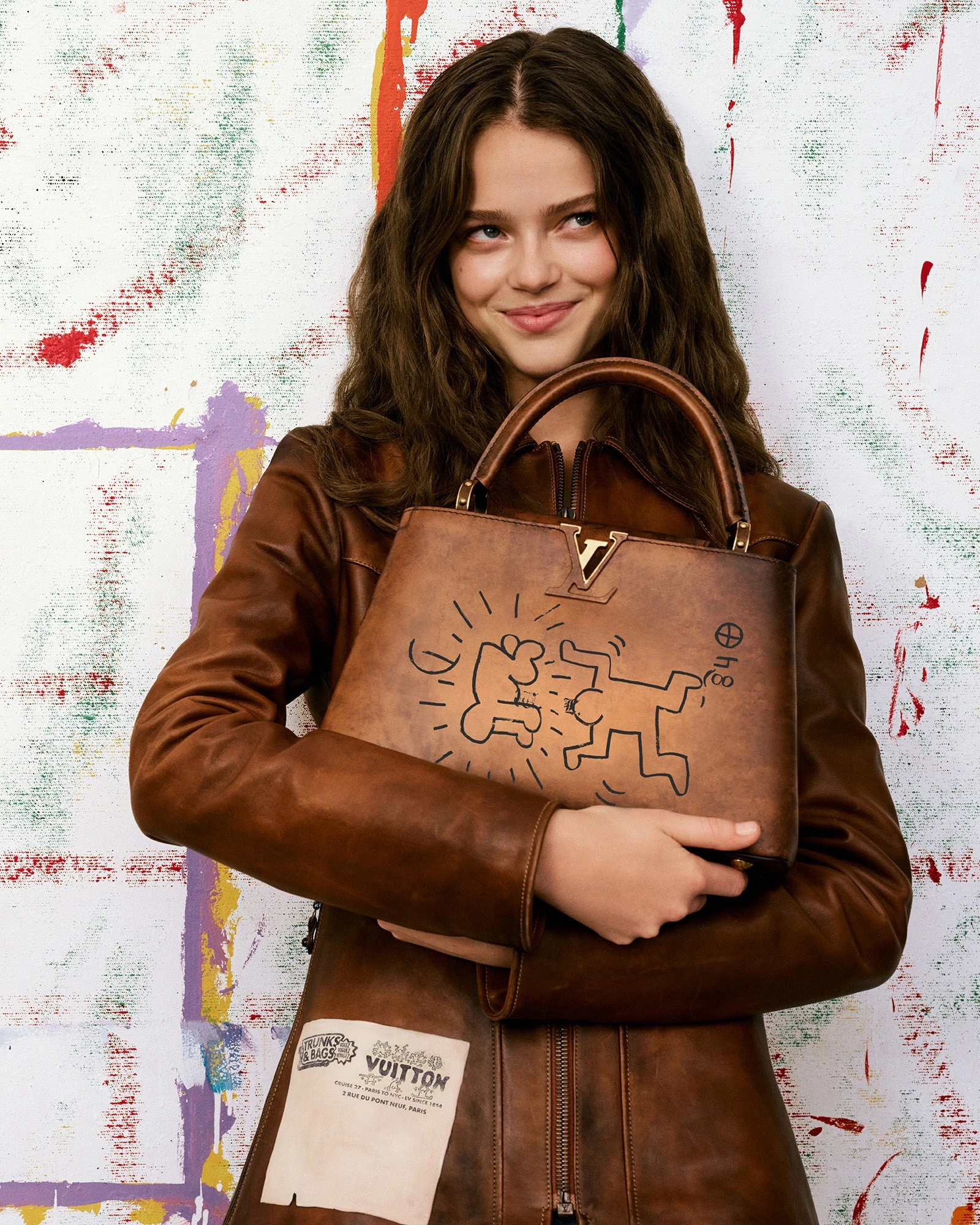
On 13 November, Louis Vuitton Japan announced a collection developed with the Keith Haring Foundation, ahead of a global release on 1 January 2027. Five themed capsules will cover bags, clothing, shoes, travel pieces and fragrance, alongside 13 limited-edition Artycapucines bags. The project grows out of Nicolas Ghesquière's Cruise 2027 show in New York, which opened with its founding object: a 1930s Vuitton suitcase that Haring drew on in 1984. The house presents it as an archive discovery; press reports say it was bought at auction in Los Angeles in 2020.
An archive bought back at auction
That detail changes the story. Haring did not choose Vuitton; he drew on a vintage case that happened to carry its monogram, then gave it to a roommate. By acquiring it, the house turned a casual gesture into provenance, and provenance into the founding narrative of a commercial collection.
It is a smart move, and a revealing one. Haring's act was personal and unsanctioned. The collection sells the reverse: an authorised, carefully controlled version of that spontaneity, across five categories at once.
The archive is the strongest asset here; the closer the range stays to the suitcase, the more it will read as heritage rather than merchandise. For other houses, the lesson is that heritage can now be bought as well as inherited.